Binoculars vs a Small Telescope: A Practical Backyard Astronomy Comparison
Two people, same driveway, same clear Saturday night. One carries a pair of 10x50 binoculars in one hand and a folding chair in the other. The other hauls a 130 mm reflector out of the garage, checks collimation by phone light, and waits for the mirror to cool. Twenty minutes later both are looking at the Moon. Only one of them is still outside at midnight.
That is not an argument for or against either instrument. It is the shape of the decision. Binoculars and small telescopes overlap far more than beginners expect, and the right choice usually comes down to how you actually observe rather than which one wins on paper. Here is the comparison worth having before you spend anything.
Portability: What You Carry Outside
A good pair of 7x50 or 10x50 binoculars weighs about a kilogram and lives in a jacket pocket, a glovebox or a kitchen drawer. There is no setup. You step outside, raise them, and you are observing. That matters more than any specification, because the best instrument is the one that leaves the house on a Tuesday when the sky is unexpectedly clear.
Telescopes ask for more. Even a small 70 mm refractor needs a tripod and a mount, and a 6-inch Dobsonian is a two-trip carry: base first, then the tube. None of that is difficult once you have done it a few times, but it changes the calculus. A reflector's mirror also needs twenty to thirty minutes outside to match the ambient temperature, otherwise higher magnifications show a soft, wobbly image. Binoculars are ready instantly.
The practical detail people forget is dew. Binoculars fog on the outside, which a cloth fixes. A telescope's corrector plate or objective can fog for good unless you have a dew shield or a heater, so plan for it in humid climates. Store both indoors, and let them warm up before you bring them back into a heated room.
Ease of Use and the Learning Curve
Binoculars have one control: the focus wheel. There is no finder to align, no eyepiece to swap, no collimation to check. Their wide field of view is forgiving when you are hunting for something, and pointing them is as natural as looking at it. The one skill to learn is steadiness. Rest your elbows on a fence post, lean against a wall, or lie back in a reclining garden chair. A monopod or a tripod adapter turns a shaky view into a stable one for very little money.
A telescope adds steps. You align the finder with the main tube in daylight, swap eyepieces to change magnification, and learn that the image in a reflector is upside down and mirrored. Higher power is a tool and a trap: it magnifies the atmosphere along with the planet. A steady mount matters more than a millimetre of extra aperture, and a wobbly tripod will ruin a good optical tube faster than any other fault.
Sharing counts too. A child or a visiting friend can use binoculars unaided. With a telescope, the eyepiece sits at an awkward height, and you will be adjusting the tripod for every person. A right-angle star diagonal and a small step stool solve most of it.
What Each One Actually Shows You
This is where the two instruments stop competing and start complementing each other.
Through binoculars you can see
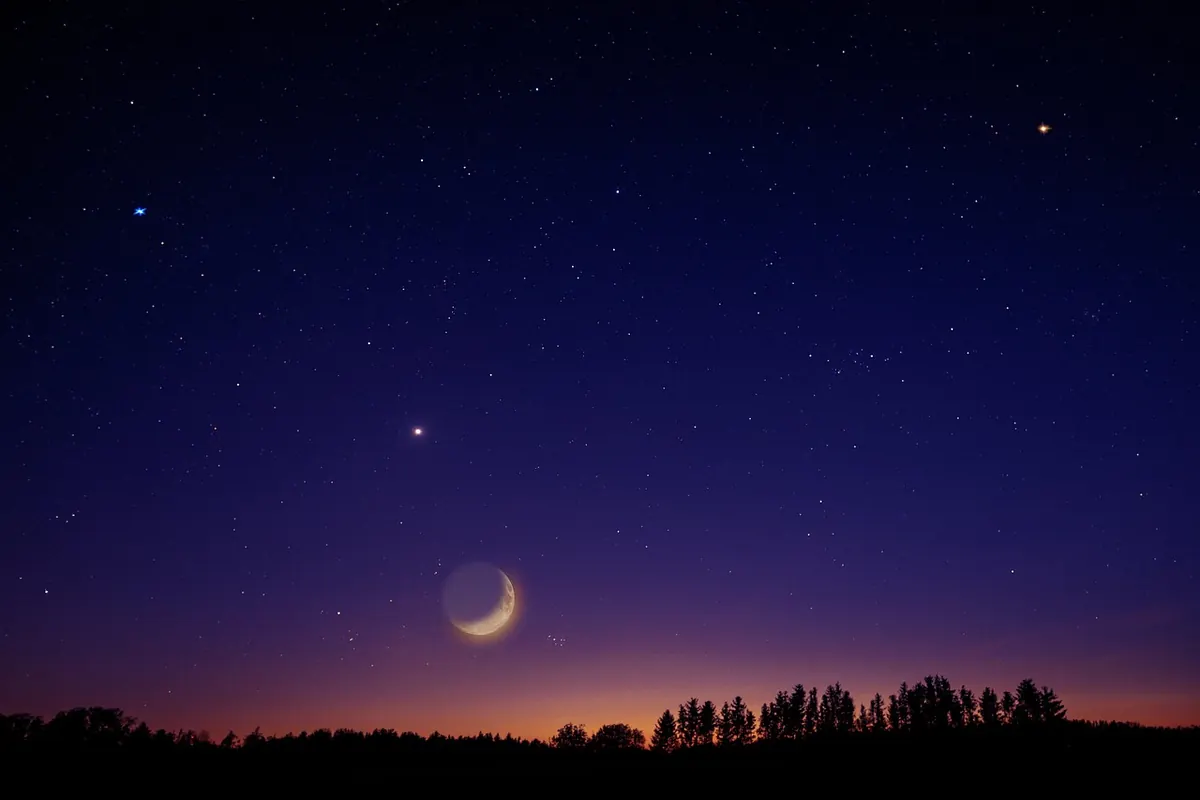
- The Moon, with the larger craters and the terminator line sharpest along the shadow edge
- Jupiter as a small disc, with up to four moons visible as a neat line of dots
- Star fields and open clusters that fit beautifully in a wide view: the Pleiades, the Hyades, the Beehive, the Double Cluster in Perseus
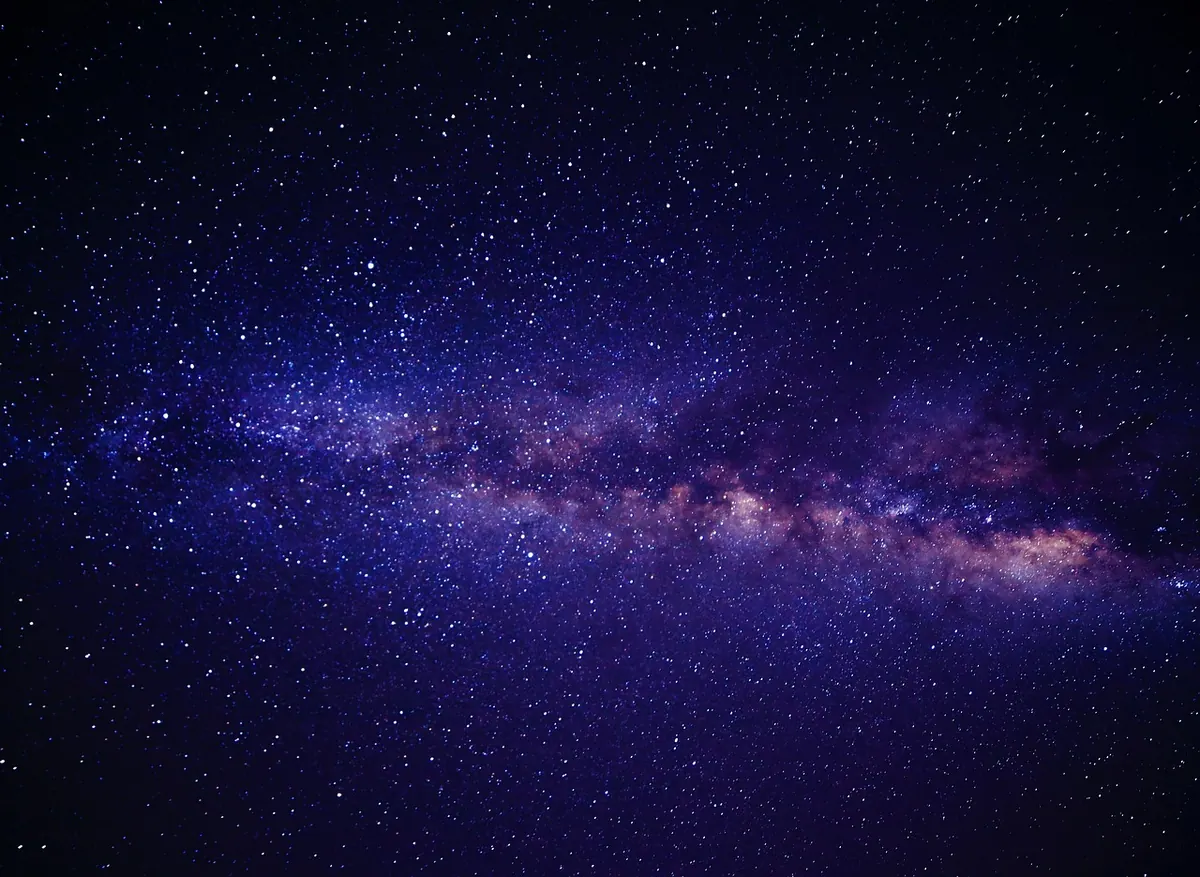
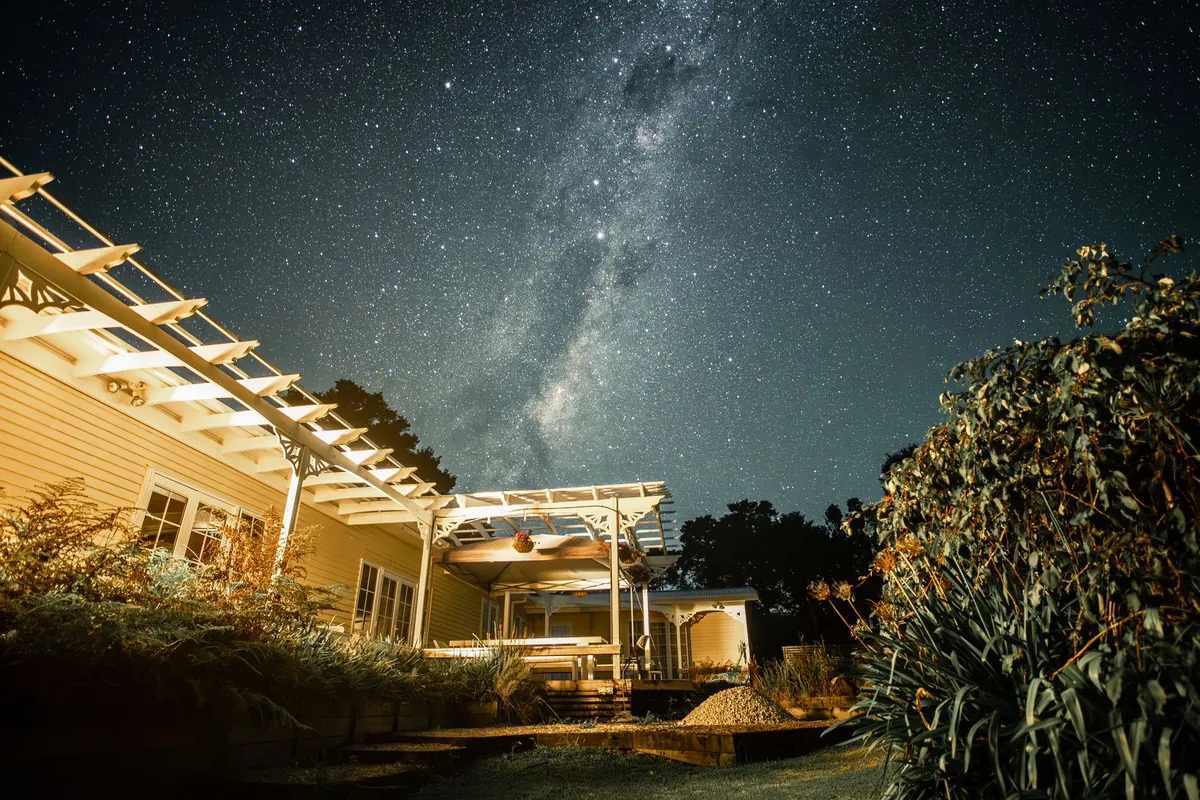
- The Andromeda galaxy as an elongated smudge, and the Milky Way's star clouds from a reasonably dark site
- Bright satellites, occasional comets, coloured double stars, and the big asterisms that teach you the sky
Through a small telescope you can see
- Craters and rilles on the Moon at a hundred times magnification and more
- Saturn's rings, and Titan as a faint point nearby
- Jupiter's cloud belts and, on a steady night, the Great Red Spot
- Double stars split, globular clusters resolved into individual stars, planetary nebulae, the Trapezium inside the Orion Nebula
- Brighter galaxies, though as faint grey smudges rather than photographs
Set expectations honestly. No small instrument shows colour in faint nebulae, and most deep-sky objects are grey. Aperture wins for anything dim and small; a wide field wins for anything large and sprawling. The Pleiades are often better in binoculars because a telescope cannot fit them in the eyepiece.
Budget: Where the Money Actually Goes
Binoculars are the better value per unit of glass. Two 50 mm objectives, prisms and coatings for a modest outlay, and no mount to buy. The trap is cheap department-store models with plastic bodies and poor coatings; look for fully multi-coated optics and a brand that publishes its specifications.
With telescopes, roughly half your money buys the mount. That is why the same aperture costs wildly different amounts, and why a rigid, simple mount beats a complicated one at low cost. Ignore any box advertising absurd magnification on a small refractor — those numbers are meaningless and the tripod underneath will shake in a breeze.
Either way, budget for one good accessory instead of three cheap ones. A tripod adapter for binoculars, a red-dot finder, or a single better eyepiece will improve your nights more than a bag of gadgets. Second-hand gear from an astronomy club is often excellent, and many clubs lend telescopes to members before they commit.
Which One First?
If your curiosity is mostly planets and the Moon, buy the telescope. If you want to learn the constellations, sweep the Milky Way and see a lot in short sessions, start with binoculars and add a telescope later. Many observers never stop using both, and the pairing is genuinely practical: binoculars to find it, telescope to study it.
Three Practical Steps Before You Buy
- Write down the three things you most want to see. That list alone usually decides the answer.
- Find your observing spot and measure how far you must carry gear in the dark. Distance and stairs favour binoculars.
- Attend a club star party and look through both instruments before spending. One evening at an eyepiece teaches more than a week of reading.
Buy the instrument that matches the sky you have and the energy you will realistically bring to it at ten at night. A modest pair of binoculars used fifty times a year beats a telescope that stays in the garage, and that is the only comparison that finally matters.
Photo: Valentin Ivantsov / Pexels