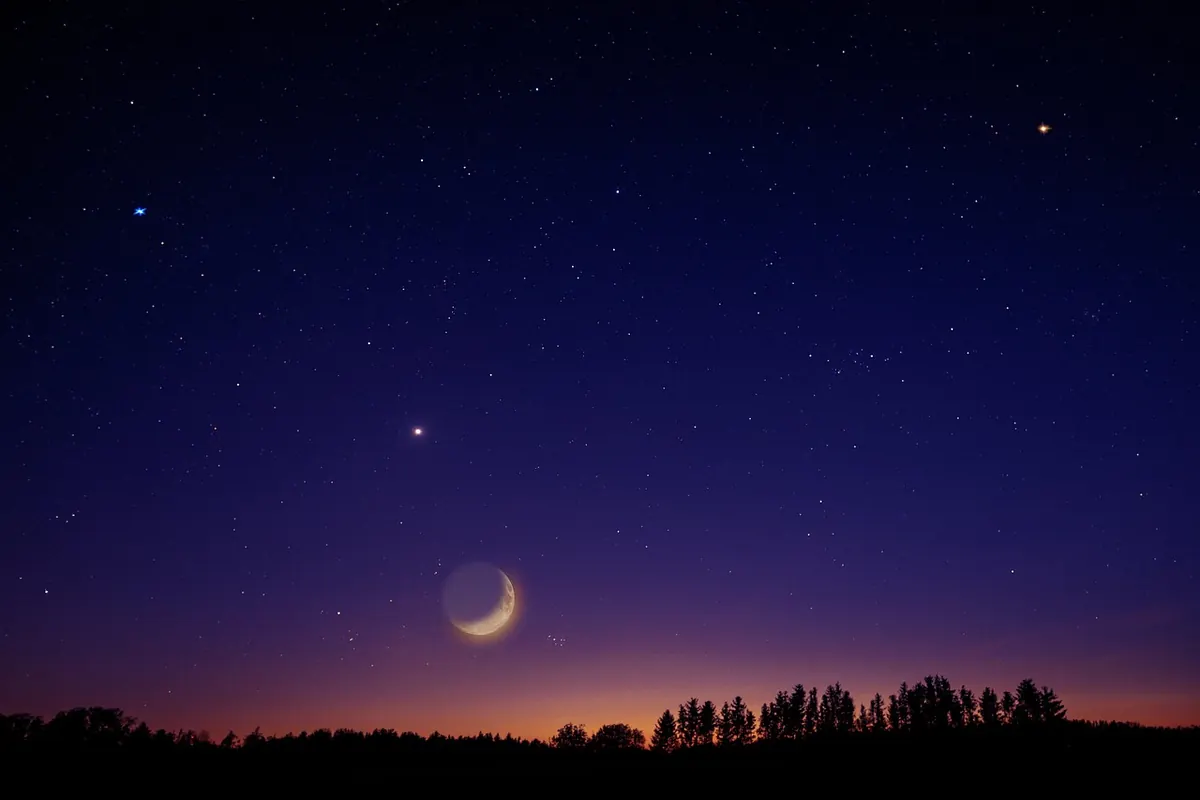
How to Plan a Stargazing Night Around Moon Phase and Twilight
A clear night is only the first condition for a good stargazing session. The sky can be cloudless and still disappointing if the Moon is blazing overhead, if twilight has not fully faded, or if your chosen target is already low behind the trees. Planning around moonlight and twilight is not bureaucracy. It is the difference between hunting a faint galaxy in a washed-out sky and finding it comfortably in a dark one.
The good news is that the information you need is simple and freely available: the Moon’s phase, its rise and set times, the Sun’s twilight stages, and a basic sense of where your target sits in the sky. With those four pieces, you can choose a night and an hour with intention rather than luck.
Start With the Moon, Not the Calendar
Most observers instinctively look for a clear weekend. A better first question is: where is the Moon? Its phase tells you roughly how much light it will scatter, but its rise and set times tell you when that light will actually interfere.
Around new Moon, the Moon is absent from the evening sky and the nights are darkest. That is the best window for faint targets: the Milky Way, galaxies, nebulae, and loose star clusters. Around first quarter, the Moon is up in the evening and sets after midnight, so early evening is compromised but the second half of the night can be dark. Around full Moon, the Moon rises near sunset and sets near sunrise, leaving little true darkness. Last quarter reverses the pattern: the Moon is absent in the evening and rises after midnight.
Do not rely on the phase alone. A crescent Moon low in the west after sunset may bother you far less than a first-quarter Moon high overhead. Check the Moon’s altitude as well as its phase, and note the times for your own location. Moonrise in one city can differ noticeably from moonrise in another, especially along a coastline or across a time zone.
If your main target is faint and diffuse, aim for a moonless window of at least an hour or two. If you are observing the Moon itself, bright planets, or wide double stars, a moonlit sky is not a problem. It may even help by providing some natural illumination at your observing site.
Understand Twilight in Layers
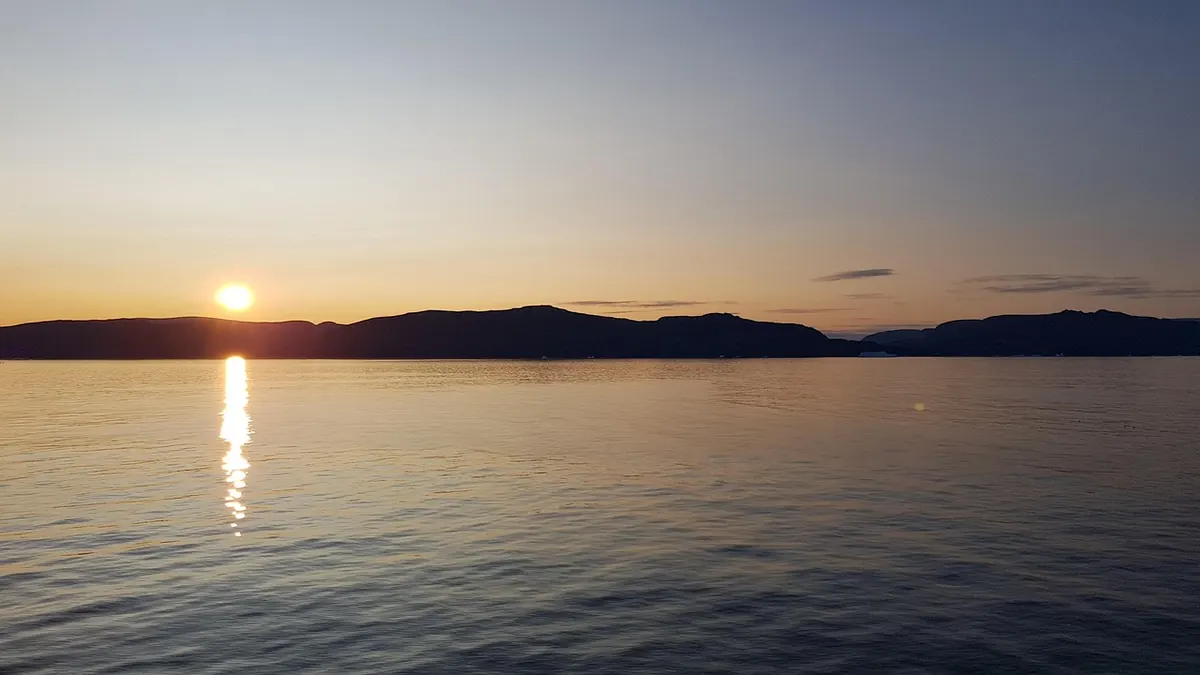
Twilight is not a single switch. After sunset, the sky passes through civil, nautical, and astronomical twilight. In civil twilight, the Sun is between 0 and 6 degrees below the horizon. The brightest stars and planets appear, and the sky still has a pale glow. In nautical twilight, the Sun is 6 to 12 degrees below the horizon. More stars emerge, and the horizon at sea becomes difficult to distinguish. In astronomical twilight, the Sun is 12 to 18 degrees below the horizon. Only after astronomical twilight ends is the sky fully dark for most deep-sky observing.
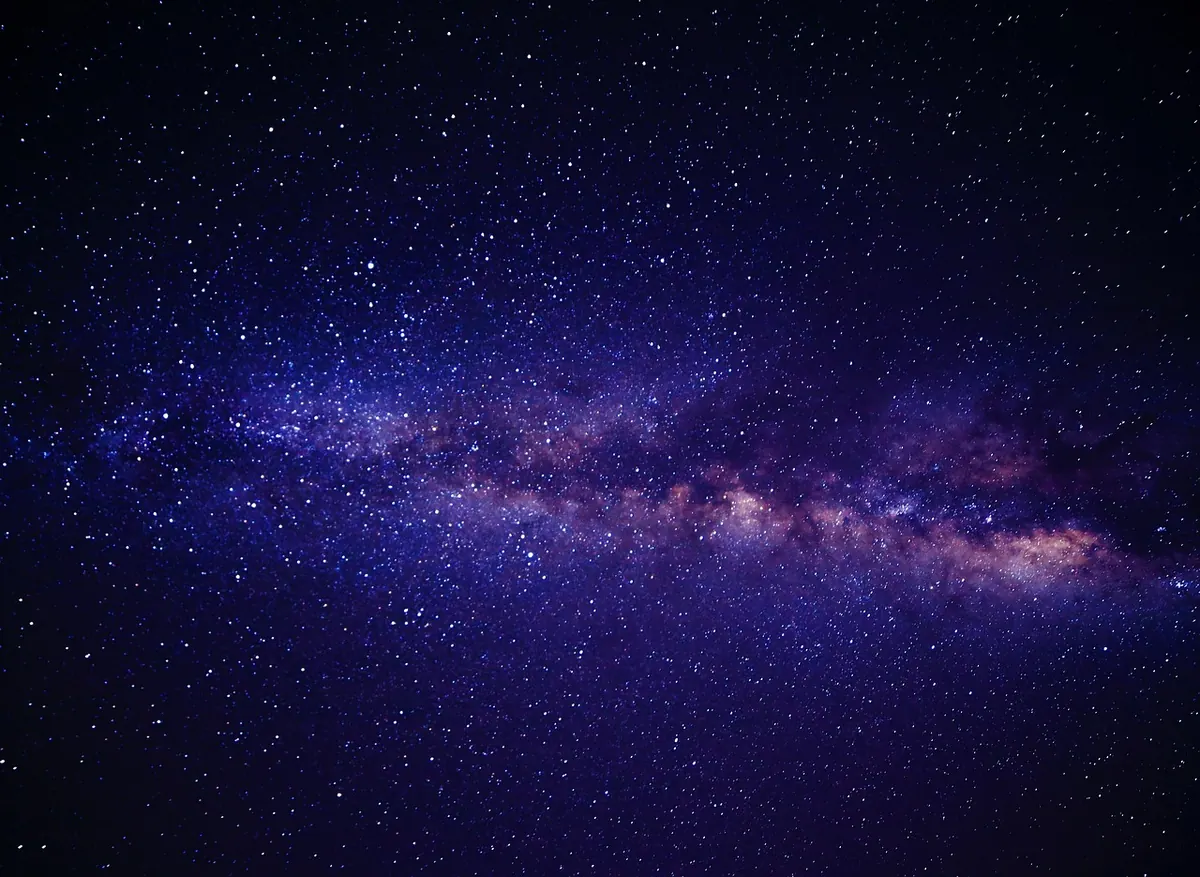
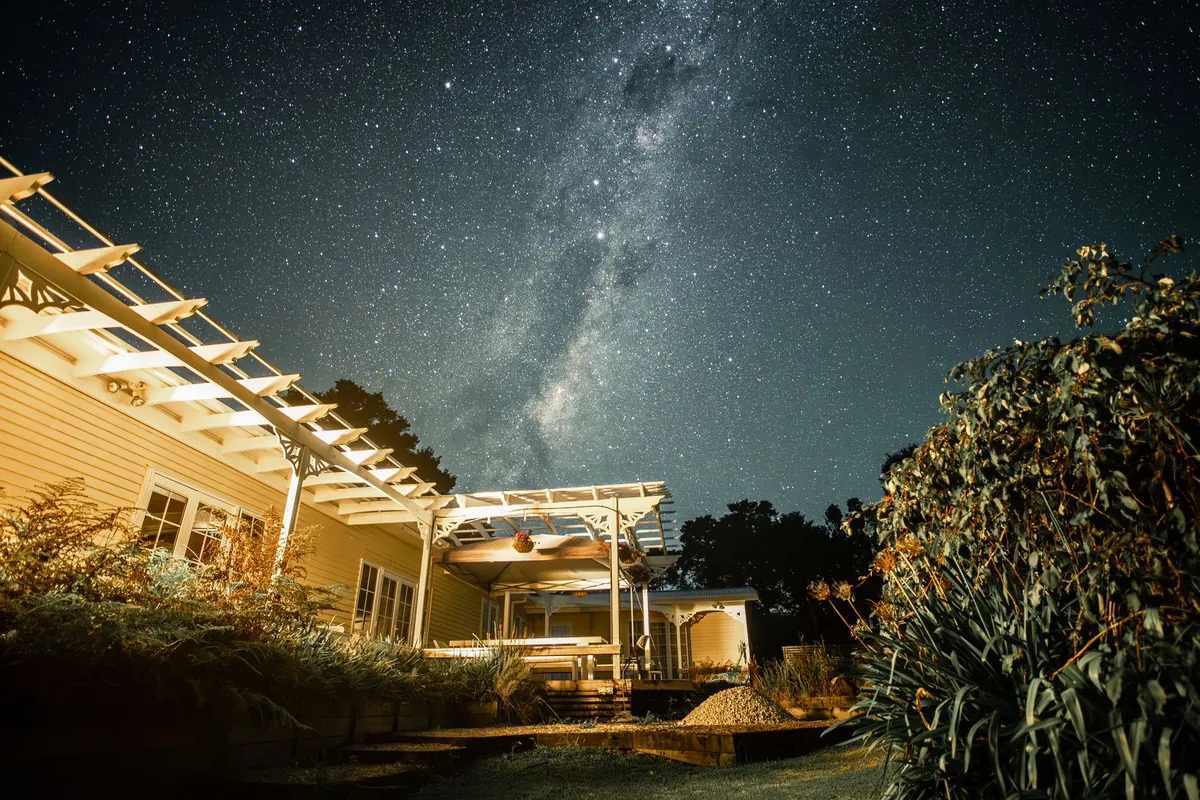
For naked-eye observing, civil or nautical twilight can be useful. It is the best time to catch Mercury or Venus near the horizon, and a crescent Moon looks striking against a deep blue sky. For binocular astronomy, though, faint clusters and nebulae need darker conditions. The Milky Way usually becomes obvious only after astronomical twilight, and only if the Moon is out of the way.
Twilight length changes with latitude and season. In summer at high latitudes, astronomical twilight may last all night or never fully end. In the tropics, darkness arrives more quickly. Use a local almanac or planetarium app to find the end of astronomical twilight for your exact date and position, then add a little buffer. The sky often continues to darken perceptibly for another twenty or thirty minutes.
Match Targets to the Light You Have
Not every object deserves a moonless night. Bright planets, the Moon, double stars such as Albireo or Mizar, and open clusters like the Pleiades can survive moderate moonlight and even some twilight. They are good choices when the Moon is up or when darkness is not fully established.
Faint galaxies, diffuse nebulae, and the Milky Way’s star clouds are less forgiving. Moonlight raises the background sky brightness and reduces contrast, which is exactly what you need for faint extended objects. A full Moon can wipe out the Andromeda Galaxy for binoculars, while a dark new-Moon night makes it an easy smudge of light. The Orion Nebula is bright enough to tolerate more light, but its fainter outer extensions still benefit from darkness.
Your own equipment and experience matter too. A pair of 7x50 or 10x50 binoculars gathers more light than the unaided eye, but it cannot cancel moonlight. The wider the field of view, the more sky brightness enters the view. If the Moon is up, concentrate on compact, high-contrast targets rather than faint, sprawling ones.
Pick the Right Hour, Not Just the Right Date
A target’s visibility depends on its altitude. An object near the horizon passes through more atmosphere, which dims and blurs it. The same galaxy that is difficult at 15 degrees above the horizon may be straightforward at 50 degrees. Plan around the target’s culmination, the moment it crosses the meridian and reaches its highest point in your sky.
This is where a simple timeline helps. Suppose you want to observe a faint autumn galaxy. Check when astronomical twilight ends, when the Moon rises or sets, and when the galaxy is highest. If the galaxy peaks at 11 p.m. but the Moon rises at 10 p.m., your best window may be brief. If the Moon sets at 9 p.m., the rest of the evening opens up. In winter, a target like Orion may be well placed by mid-evening; in spring, the same region is already sinking in the west after dark.
Also account for local obstructions. A tree line, a building, or a bright streetlight can remove the first twenty degrees of your sky. A planet that is technically visible may be useless from your garden. Walk your observing site in daylight and note which directions are open.
Build a Simple Observing Plan
A little planning prevents the common experience of standing outside at 10 p.m., unsure what to look at. Keep it flexible, but give the night a shape.
- Choose one primary target. Pick something that matches the available darkness, such as the Moon during a bright phase or a galaxy during a new-Moon window.
- Check twilight times. Note sunset, the end of civil twilight, and the end of astronomical twilight for your location.
- Check the Moon. Record phase, rise time, set time, and approximate altitude during your session.
- Check the weather. Look for clear skies and reasonable transparency. A clear but hazy night is poor for faint objects.
- Schedule bright targets first or last. Use twilight or moonlit periods for planets, double stars, and the Moon; save faint objects for the darkest window.
- Prepare a backup. If the Moon is brighter than expected or clouds roll in, have a bright cluster or lunar target ready.
- Allow time for dark adaptation. Give your eyes twenty to thirty minutes away from white light, and use a red torch if you need one.
Use the Moon Instead of Avoiding It
A bright Moon is not a failed night. It is a different kind of night. Lunar craters and mountain ranges are superb through binoculars, especially near the terminator where shadows are long and the relief stands out. Full Moon is less dramatic for lunar detail because the light is direct, but it is still worth a look. Bright double stars, planets, and some open clusters remain satisfying targets.
The practical approach is to let the Moon decide the menu. Dark nights are for faint fuzzies. Moonlit nights are for sharp, bright, compact objects. Twilight is for the horizon and the brightest planets. Once you think in those categories, you stop fighting the sky and start using it.
A Practical Closing: Pack, Wait, Look
Before you go out, write down your target, your dark window, and your backup. Take a star chart or a charged phone with a red filter, warm layers, and binoculars that are already adjusted. Arrive before the end of twilight so your eyes can adapt as the sky darkens. Then be patient. The best view often comes after the first ten minutes of standing still, when the faint stars emerge and the sky settles around you.
If the Moon or twilight ruins your first plan, adjust rather than pack up. Move to a brighter target, wait for the Moon to set, or simply enjoy the transition from dusk to darkness. Planning gives you better odds, but the sky always keeps some of the schedule.
Photo: Bru-nO / Pixabay